
We help you succeed with essential feedback
from others. Here's how:
- Explain to participants the benefits of a 360-Degree Feedback Program
- Conduct online surveys and/or individual interviews
- Analyze data and write 360 Feedback Reports
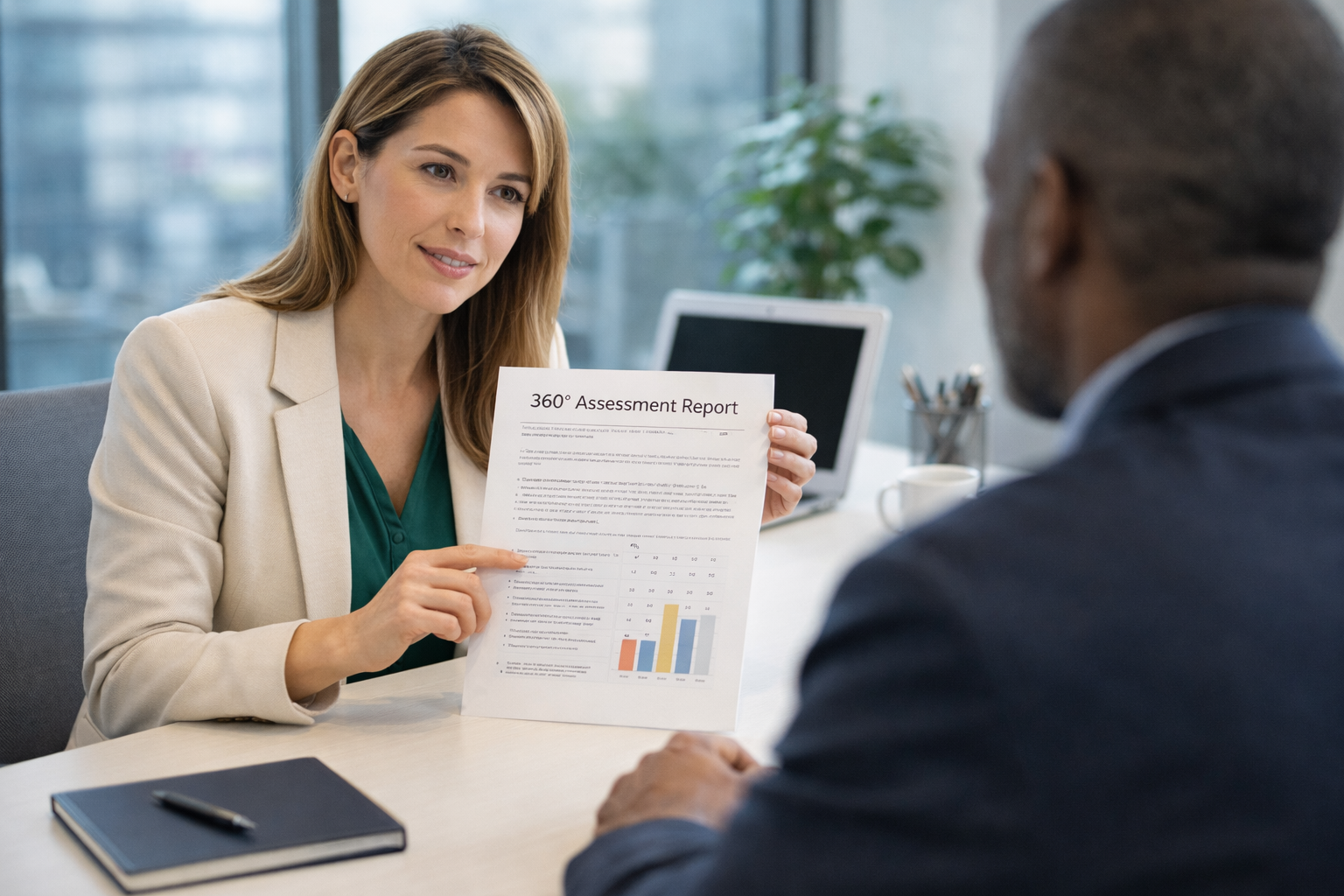
- Meet with participants to provide one-on-one feedback
- Provide tools for creating development plans
- Offer follow-up coaching to get traction on development areas
360-Degree Assessments
A 360-degree survey provides feedback for leaders from key people around them. We don’t see ourselves as others do, and a 360-degree survey lets participants see how they are perceived by everyone they work with, not just their supervisors.
Participants can compare their self-view with the feedback from others and quickly spot gaps in their effectiveness.
You can survey one person or an entire team.
There are three methods for conducting 360-degree assessments: interviews, online surveys, or a hybrid of both.
Areas covered by the survey commonly include the leader’s effectiveness in planning, goal setting, leadership, communication, team development, delegation, and other key competencies.
A Feedback Report compares the participant’s view to those of the other raters, and it has recommendations for how the participant can improve.
Best Practices
According to the Center for Creative Leadership (CCL), the following guidelines ensure optimum success when performing a 360-degree assessment:
- Clarify the goal and purpose for everyone involved
- Clarify rater anonymity, accountability, and selection
- Prepare participants
- Review and interpret feedback results
- Develop an action plan
- Follow up on the action plan
Note: 360-degree surveys should not be used for making promotional or disciplinary decisions.